excellent article reblogged from the Guardian
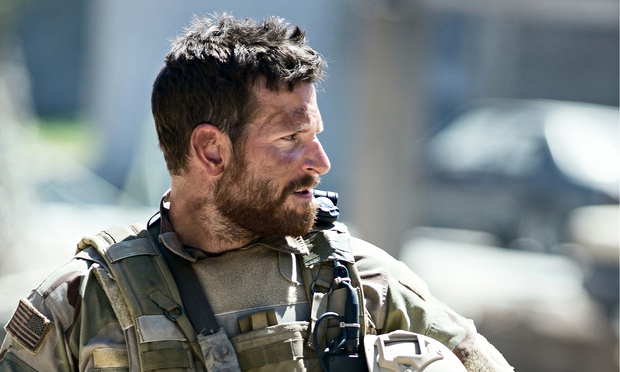
Say what you like about the film American Sniper, and people have, you have to admire its clarity. It’s about killing. There is no moral arc; no anguish about whether the killing is necessary or whether those who are killed are guilty of anything. “I’m prepared to meet my maker and answer for every shot I took,” says Bradley Cooper, who plays the late Chris Kyle, a navy Seal who was reputedly the deadliest sniper in American history. There is certainly no discursive quandary about whether the Iraq war, in which the killing takes place, is either legal or justified. “I couldn’t give a flying fuck about the Iraqis,” wrote Kyle in his memoir, where he refers to the local people as “savages”.
The film celebrates a man who has a talent for shooting people dead when they are not looking and who, apparently, likes his job. “After the first kill, the others come easy,” writes Kyle. “I don’t have to psych myself up, or do anything special mentally. I look through the scope, get my target in the crosshairs, and kill my enemy before he kills one of my people.”
Americans are celebrating the film. It has been nominated for six Oscars and enjoyed the highest January debut ever. When Kyle kills his rival, a Syrian sniper named Mustafa, with a mile-long shot, audiences cheer. It has done particularly well with men and in southern and midwestern markets where the film industry does not expect to win big. And while its appeal is strong in the heartland it has travelled well too, providing career-best opening weekends for Clint Eastwood in the UK, Taiwan, New Zealand, Peru and Italy.
And so it is that within a few weeks of the developed world uniting to defend western culture and Enlightenment values, it produces a popular celluloid hero who is tasked not with satirising Islam, but killing Muslims. Threats to Arab and Muslim Americans have tripled since the film came out, according to the American-Arab Anti-Discrimination Committee. It’s not difficult to see why. “If you see anyone from about 16 to 65 and they’re male, shoot ’em,” wrote Kyle, describing his understanding of the rules of engagement in Iraq. “Kill every male you see. That wasn’t the official language, but that was the idea.”
Categories: Life in the West, News, Terrorism
 Blogging Theology
Awesome post.
It is morally sickening how Americans cheer a man who killed 168 people although America is invaded it for no valid reason… Iraq did not kill one American.
Having said this, I am not against American support for moderates in Syria and Iraq against ISIS, brutal criminals who make perversion of Islam.
But the American invasion of Iraq in 2003 was evil and the the magnitude of suffering America caused on Iraqis in 1990 of killing 100,000 Iraqis (for the killing of a few thousand Kuwaitis) and the killing of hundreds of thousands of Iraqi civilians through the sanctions was evil.
I am not America and I love the American constitution and I wish the best for all Americans. But we must be truthful of history, especially very recent history.
God knows the heart of all. Anyone can say they are for “god, country, and family” but God knows if he/she is really for Him or for the false idols he makes of God, of country, and family.
I call on all peaceful people of whatever religion or no religion to treat others as they would be treated and I request people of whatever religion to pray to God that the oppressors in American or anywhere are prevented from hurting anyone innocent.
LikeLike
Completely agree. The american constitution is great and alot of amazing men were living during the decleration of independence.
However today some politicians have made bad decisions and a blind form of patriotism seems to be growing in America.
LikeLike
Ironic how God allowed in 2013, a US marine member to kill Chris Kyle, this Navy Seal member who got 14 awards and who in history of snipers killed the most number of people.
Instead of reflecting on this why did God allow this “award winner” to be killed himself, this murderer who volunteered for this illegal invasion that destroyed the lives of millions is made into a hero.
Kyle wrote in his book that he does not give a “fuck about Iraqis”
He also wrote that killing was “fun” and he “loved it.”
So sickening.
Peace and sunshine to all.
LikeLike
Former Governor of US State Minnesota, Jesse Ventura,
Chris Kyle is not a hero because a hero needs honor and he “has no honor.”
LikeLike
Just to clarify the obvious, I am not condoning or celebrating what happened to him.
It is wrong for anyone to kill a fellow countryman or military person because of disagreeing what that person perpetuated, the killing of some 170 persons in the context of an illegal invasion.
When anyone does that it creates lawlessness. People should leave law into the hands of the government and if the government is not just, they should leave it to God.
I have heard that Islamic law forbids people to take law into their own hands.
Although many US military persons died through suicide, I don’t even one military person has been killed in the last decade since the Iraq war.
So this killing of Kyle and the killing of the friend of Kyle is indeed rare. That the killer of those two was a fellow marine makes it even more ironic (this marine who killed Kyle was suffering from PTSD). And now this killing has been made known to the wide public because of the blood loving horrible movie American Sniper.
All events that occur do not prove that God wanted them to occur but of course all events, even bad events, occur by the will of God.
Thus thoughtful people should reflect that the rare and ironic event in 2013 could have been a lesson that God does not approve of those who kill people and call it “fun” and say they “loved it” such as Kyle did as he shot and killed nearly 170 people.
But the creators and the naive viewers of the horrid movie fabricate up their own opposite lesson and make Kyle, a mass killer, into a hero.
LikeLike