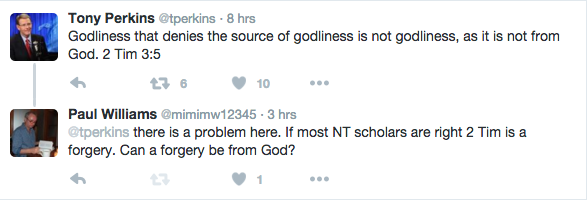
Tony Perkins is president of the American Family Research Council and an ordained minister. He probably thinks it is beneath himself to reply to my humble tweet, but it raises a real issue that is not usually confronted by church leaders: New Testament scholars be they liberal, conservative or radical, mostly concur that the NT does contain works that were not in fact written by the people they claim to be. In plain crude street language they are forgeries. Assuming for the moment that these academics are correct then what does it mean to believe they are ‘inspired by God’? Does God inspire falsehoods and lies? Should forgeries be removed from the canon? In my limited experience I have never come across a frank discussion of this problem in the churches.
Categories: Bible, Biblical scholarship, God
 Blogging Theology
Using Islamic scholarly tradition by who and how the content of books of scripture were actually written is important. In contrast the church tradition has recognised only what matter as reflective of its theology; not who they were actually written by.
However I suspect those conservative who believe of biblical inerrancy, they will rightly denies the forgeries and may try to find explanation in any other way.
LikeLiked by 1 person