In this week’s Reader’s Mailbag I will be addressing two questions about me personally, and my work. The first has to do with my controversies with fundamentalists, and the second with which of my scholarly books would be accessible to a non-scholar. If you have questions you would like me to address in this format, let me know!
QUESTION:
Professor Ehrman, did you anticipate such vitriolic attacks on your character from fundamentalists when you set out on your publishing career years ago?
RESPONSE:
I have to admit, I’m always surprised when I hear what a persona non grata I am in some Christian circles. Just yesterday I was doing a podcast interview for my new book Jesus Before the Gospels, the interviewer, a former pastor, told me that when he was in his conservative Christian seminary, as a student, he had been warned never to read any of my books, because I was trying to lead people astray. As always, I thought: How strange! I’ve never had as my purpose to lead anyone astray and I don’t see my books as anti-Christian.
I know that some readers – my atheist, agnostic, humanist, free-thinking friends (I consider myself all of the above, by the way) – may find that disappointing, because what they really want (not all of them, but some of them) is for me to “stick it to” the Christians. But I am not at all opposed to Christianity. I am simply opposed to any kind of fundamentalism (not just Christian). My books show why a fundamentalist understanding of the Bible simply cannot stand up under scrutiny. Anyone with a literalistic reading of the New Testament who insists that it cannot have any mistakes of any kind – no discrepancies, contradictions, or historical errors – is simply wrong, and can be shown to be wrong. But that is not an attack on Christianity. It is an attack on fundamentalist Christianity. Anyone who thinks that this is the same thing is him/herself a fundamentalist, either a Christian fundamentalist or an anti-Christian fundamentalist!
I did not start off my publishing career expecting to be controversial. Quite the contrary, I started by publishing hard-core scholarship for hard-core scholars. When I published my first trade book (for a general audience), Jesus: Apocalyptic Prophet of the New Millennium, I had no plan at all to say anything that would rouse popular opposition or anger. I wanted to explain the view of Jesus that had been prominent among scholars for over a century, that Jesus was a Jewish apocalyptic preacher who expected the history of his world to come to a crashing climax within his own generation.
It turns out that is a highly controversial view (to my initial surprise), even though it is widely held among scholars, for two reasons: (1) it suggests (or, rather, points out) that Jesus was wrong in his expectation and (2) most people have never heard that before. They’ve never heard it because scholars have never told them.
My other trade books have also, for the most part, meant to communicate to a broader audience what scholars have said about the Bible. That’s true of my second trade book, Lost Christianities (which my wife claims is the best trade book I’ve written; it’s about the forms of Christianity that didn’t make it and how the controversies they sparked led to the formation of our 27-book New Testament), my most popular trade book, Misquoting Jesus (which is about the scribes who altered the manuscripts of the New Testament they were copying), and probably my hardest-hitting statement of scholarly views of the New Testament, Jesus Interrupted (about the discrepancies, forgeries, and other problematic aspects of the New Testament).
As time went on, I have said some things that I knew would be controversial – for example, my argument that there are indeed forgeries in the New Testament (scholars have long known this, but they are very reluctant to call them forgeries, even though that’s what they are and even though that’s what ancient readers would have considered them to be if they had known that the alleged authors of these books did not actually write them) or that Jesus was not given a decent burial by Joseph of Arimathea (as I argue in How Jesus Became God). But even these claims are not simply meant to stir up controversy: they are meant to embody the results of my scholarship, and they are based on evidence and argument, not simply on the wild opinions of a particularly liberal professor who teaches at a particularly liberal university.
So in short answer: no, I didn’t really expect to be all that controversial. I simply wanted, and still want, to present the results of serious scholarship to readers who have not had the opportunities to pursue research in New Testament studies as a career.
Which takes me to the next question:
QUESTION:
Without having an actual copy in my hand, e.g. ordering online, which of your books (if any) have academic prerequisites, and which can even a layman read, popular audience or not?
RESPONSE:
Some of my books are the sorts of things you really would not want to look at if you’re not a scholar trained in the field of New Testament studies, specifically in the study of the Greek manuscript tradition of the New Testament. These would include Didymus the Blind and the Text of the Gospels (when people tell me “I’ve read all your books!” I’m always tempted to ask how they liked my book on Didymus. J ); The Text of the Fourth Gospel in the Writings of Origen (a book on a comparable topic); The Text of the New Testament in Contemporary Research (I co-edited that one); the fourth edition of Bruce Metzger’s book that I helped him produce, The Text of the New Testament; and, probably, my collection of (my own) essays Studies in the Textual Criticism of the New Testament.
Other books are meant for scholars but if you don’t mind working hard and slugging through a work of scholarship at a relatively deep level, these would be relatively accessible to a lay reader who is reasonably well informed about the field. I would include in that category The Orthodox Corruption of Scripture: The Effect of Early Christological Controversies on the Text of the New Testament and Forgery and Counterforgery: The Use of Literary Deceit in Early Christian Polemics.
Other books are meant to be scholarly tools that could be useful to non-scholars as well, at least in part. Here I’m thinking of translations of ancient texts that I’ve done in which I include the original language (Greek, Latin, and Coptic) for scholars who want to see what the original-language text that I’ve translated says. That would include my two-volume Apostolic Fathers that appeared in the Loeb Classical Library and the volume I co-edited/translated with my colleague Zlatko Plese The Apocryphal Gospels: Texts and Translations. (Anyone who wants just the English translations of these Gospels, with simpler and less detailed introductions to each text, can get them in the volume we published for those not interested in the original languages, The Other Gospels).
Other books are textbooks for college/university students. I have two on the New Testament, The New Testament: A Historical Introduction to the Early Christian Writings; and The New Testament: A Brief Introduction (the latter is a simplified version of the former, shorter and less detailed) and one on the entire Bible The Bible: A Historical and Literary Introduction. Even though a lot of people may not be interested in using a college-level textbook, one value of these books is that they cover the entire set of questions one might have about the NT/Bible, and include bibliography at the end of each chapter for further reading on each topic/NT book.
Other books produced for college-classroom use are anthologies of texts that would be quite useful for broader audiences: The New Testament and Other Early Christian Writings (all the books written by Christians – including the NT itself – prior to 130 or so, i.e., in the first century of Christianity); After the New Testament (a large selection of Christian writings from the second and third centuries); and Christianity in Late Antiquity (co-edited with Andrew Jacobs, a collection of writings from the fourth and fifth Christian centuries). Again, these books all include bibliographies for further reading at every point.
All my other books are meant for a general audience. So take your pick!
—————————∞————————-
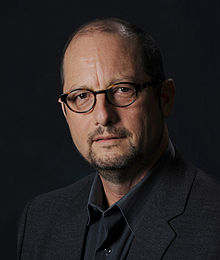
Bart Ehrman is an American New Testament scholar, currently the James A. Gray Distinguished Professor of Religious Studies at the University of North Carolina at Chapel Hill. According to the Journal of the Evangelical Theological Society, he is one of North America’s leading scholars in his field, having written and edited 30 books, including three college textbooks. He has also achieved acclaim at the popular level, authoring five New York Times bestsellers. Ehrman’s work focuses on textual criticism of the New Testament, the historical Jesus, and the development of early Christianity.
Categories: Bible, Biblical scholarship
 Blogging Theology
“Anyone with a literalistic reading of the New Testament who insists that it cannot have any mistakes of any kind – no discrepancies, contradictions, or historical errors – is simply wrong, and can be shown to be wrong. But that is not an attack on Christianity. It is an attack on fundamentalist Christianity. Anyone who thinks that this is the same thing is him/herself a fundamentalist, either a Christian fundamentalist or an anti-Christian fundamentalist!”
I wonder if Bart can show early forms of Christianity that did not think those texts were inspired and inerrant…
LikeLiked by 1 person
I think it is widely believed that the earliest Christians didn’t consider the New Testament writings as scripture. For example, Mark was used by Matthew and Luke. They made all sorts of changes to it. Clearly, it was important enough to be used, but the text was not sacrosanct or sacred. It could be changed and corrected. Paul wrote letters to his followers. It is unlikely that he viewed himself as writing sacred scripture. Revelation may be an exception. Even much later the oral traditions were more valued. Gospel harmonies were produced which required one to alter and amalgamate the gospel texts in order to come out with a single unified version.
The words of Jesus were most important, even more than that of the Hebrew Bible. That was the authority for the earliest Christians.
LikeLiked by 3 people
excellent points Arif
LikeLiked by 1 person
I used to be a great fan of Bart and have got most of his non scholarly books which I really recommend. Haven’t read anything for a couple of years, so thanks for this!
LikeLiked by 1 person
You are welcome James
LikeLike
how early church canonize four gospel with full of contradiction and inconsistency ? because before written gospels they hear same stories with hundreds of different version. that make easy for them to canonize four odd gospels.
LikeLike
Bart cannot identify one word in the N.T. spoken by Jesus. How can he insist Jesus was misquoted?
LikeLike
That’s not what Bart argues. As an historian he only speaks in terms of probabilities not certainties. He is on record as saying much in the synoptic tradition is likely from Jesus. But many sayings attributed to Jesus in John are not historical. That view, btw, is the standard scholarly view. It is deeply troubling to conservative Christians and threatens evangelical preaching.
LikeLike
Bart, or whoever is speaking for him, would you like to go on the record citing the words Jesus did speak, if any?
If you would like to say which sayings, specifically attributed to Jesus, are not historical, please do.
LikeLike
why not read his books? They discuss these issues.
LikeLike
“Jesus’ teachings of love, and mercy and forgiveness, I think, really should dominate our lives,” he says. “On the personal level, I agree with many of the ethical teachings of Jesus and I try to model my life on them…” Erhman
Bart, when, in what context– when He was misquoted or when others forged the New Testament– did Jesus teach about love, mercy and forgiveness? How have you figured out what it was that the real Jesus taught? Since we don’t know what He said, who was it, in your opinion, who thought of those principles you try to model your life on?
What exactly did He say about love, mercy and forgiveness? If those things should dominate our lives and you try to model your life on them, but you don’t know which if any words recorded in the New Testament are the words Jesus spoke, how can you credit Jesus for fashioning statements that should dominate your life?
LikeLike
Paul, if you respond to me when I direct my comments to Bart, please don’t think it is rude of me not to answer you.
Bart is a world renown biblical scholar and he makes profound errors, profound and numerous errors, all over the place. If he prefers not to address each of these mistakes, so be it. I don’t blame him in a sense.
Just a polite reminder. You don’t know what I’ve studied and read, do you? I appreciate your loyalty to him, but surely he can address these issues if he is willing to examine them.
LikeLike
Hank
Bart Ehrman is an American New Testament scholar, currently the James A. Gray Distinguished Professor of Religious Studies at the University of North Carolina at Chapel Hill. He is one of North America’s leading scholars in his field, having written and edited 30 books, including three college textbooks. He has also achieved acclaim at the popular level, authoring five New York Times bestsellers. Ehrman’s work focuses on textual criticism of the New Testament, the historical Jesus, and the development of early Christianity.
So go and read some of his books. Email him directly. I’m sure he does not read this blog. He does not need me to defend him.
LikeLike
Based on your reading, where in his written material does he address the questions I’ve posed?
LikeLike
Mr. Lewis’ best-selling fiction book, The Chronicles of Narnia, has sold more than 100 million copies, and has been translated into 47 languages and adapted into three major motion pictures. (Not to mention Shadowlands.) Since his death, on the day JFK was murdered, his annual book sales average about 2,000,000. He gave away about two thirds of his income and personally served the poor and visited the sick.
Promoting Dr. Ehrman’s prowess as a scholar through his considerable book sales is appropriate. However, if you live by the sword, you very well may die from the sword, too.
I think Bart’s donating the donations he receives to promote his books is just fine. Compare it to the sacrifices some Christians make to help the hurting and I’m afraid the sword you are wielding isn’t so impressive.
LikeLike
“Jesus’ teachings of love, and mercy and forgiveness, I think, really should dominate our lives,” he says. “On the personal level, I agree with many of the ethical teachings of Jesus and I try to model my life on them…” Erhman
You see Dr. Ehrman, this is why your devotion to shedding light on the inaccuracies found in the New Testament is so important. It encourages young and old, lay folks and the clergy, to believe Him and His teachings and to make them preeminent in everything they do and are and hope to be.
Notice that Jesus expounds the true nature of love, “Greater love hath no man than this, that a man lay down his life for his friends.” “This is My commandment, that you love one another as I loved you.” And this, “”A new command I give you: Love one another. As I have loved you, so you must love one another.” These are His most powerful teachings on love, Bart.
Paul adds a few thoughts that further refine the exact substance of love, “Love is patient, love is kind. It does not envy, it does not boast, it is not proud. It does not dishonor others, it is not self-seeking, it is not easily angered, it keeps no record of wrongs. Love does not delight in evil but rejoices with the truth. It always protects, always trusts, always hopes, always perseveres. Love never fails. But where there are prophecies, they will cease; where there are tongues, they will be stilled; where there is knowledge, it will pass away.”
I agree with Dr. Ehrman that His teachings about love should dominate all of our lives.
LikeLike