Those who think “Christ-mass” season are time for Jesus (p) the Christ.
Think twice.
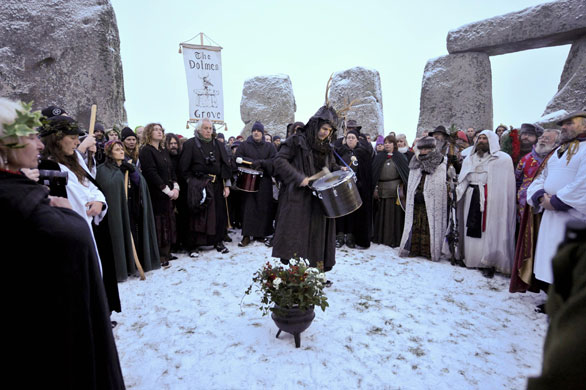
Pagan customs centering round the January calends gravitated to Christmas. Tiele (Yule and Christmas, London, 1899) has collected many interesting examples. The strenæ (eacute;trennes) of the Roman 1 January (bitterly condemned by Tertullian, de Idol., xiv and x, and by Maximus of Turin, Hom. ciii, de Kal. gentil., in P.L., LVII, 492, etc.) survive as Christmas presents, cards, boxes.
It is only sinners (like Pharaoh and Herod) who make great rejoicings over the day on which they were born into this world below” (Origen, in Levit., Hom. VIII, in Migne P.G., XII, 495)
It seems that many unsuspected christians out there had adopted the Pagan mid-winter festival and mixed in a few other Pagan goodies as the reason to celebrate the birthday of Jesus (p).
December 25th was unlikely the birth of Christ or because it was even near it. It was selected because it coincided with the idolatrous pagan festival Saturnalia—the ancient Roman festival of Saturn in December, which was a period of general merrymaking. In any event, we do not know the exact date of Jesus birth. I wonder why God could not have made it known to people.
Categories: Christianity, History
 Blogging Theology
Interesting that Origen condemns celebrating birthdays entirely.
Most Christians just don’ seem to care anyore, we can tell them till we are blue in the face that the 25th is not thought to be the actual birth date of Jesus p, will they desist? Their leaders know all this, yet they remain quiet on these issues.
LikeLike