The Vatican organisation called the Pontifical Biblical Commission has been regarded as a sort of watchdog of Catholic Biblical studies. Here is a quotation from a review of the Commission’s document “Instruction Concerning the Historical Truth of the Gospels” by Joseph A. Fitzmyer S.J. one of America’s leading Catholic New Testament scholars who sadly died in December. He writes:
“The most significant thing in the whole document, when all is said and done, is that the Biblical Commission calmly and frankly admits that what is contained in the Gospels as we have them today is not the words and deeds of Jesus in the first stage of tradition, nor even the form in which they were preached in the second stage, but only in the form compiled and edited by the Evangelists.”
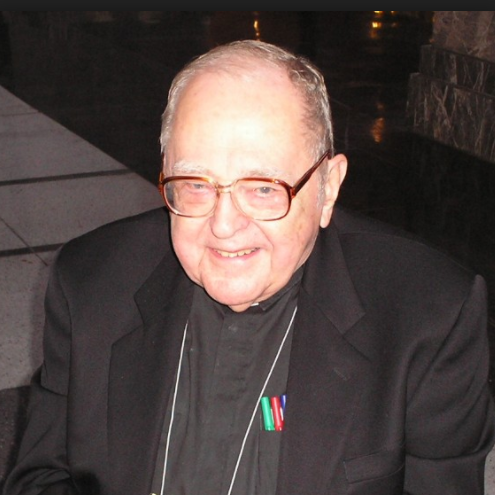
Joseph Fitzmyer, S.J. (died December 2016)
When the Church admits that it no longer has the actual unvarnished words of Jesus: “what is contained in the Gospels as we have them today is not the words and deeds of Jesus in the first stage of tradition”, but only the words as they have been changed and modified by later unknown/anonymous scribes – we have cause to be concerned.
Categories: Biblical scholarship, Christianity
 Blogging Theology
Wow!
LikeLike
This is a huge admission by the church, and a wake up call to every Christian!!
If the Gospels do not contain the original divine truth, then what does Christianity have to offer other than man made mythologies?
LikeLiked by 1 person
What an admission. Wow.
LikeLiked by 1 person
Yep.
LikeLike
This admission would seem devastating to ones faith belief in chistianity. I am sure the Church is only now quietly admitting what it has known to be true for hundreds of years. I wonder how long it will take for this to filter down to the lay Christian on the Pue? It’s only a matter of time.
LikeLiked by 1 person
Great selective quoting Paul, and to everyone else please check the quote yourself.
The Commission insists that the apostles passed on what Jesus had actually said and done “with that fuller understanding which they enjoyed” as a result of the experience they went through at the first Easter and the illumination of the Spirit of Truth at Pentecost. Obvious examples of this fuller understanding from the Johannine Gospel are cited (2:22; 12:16; 11:51-52). These instances are explicitly so identified in the sacred text itself; but the Commission gives no indication that this fuller understanding is limited to these three passages only. For the accommodation to the needs of the audiences, on which stress is put, must have often made the apostles rephrase sayings and recast their stories. Certainly, some of the differences in the Synoptic tradition are due to this sort of accommodation, which affected the oral tradition in the preliterary stage–no matter how much leeway we may want to allow the Evangelists themselves in the third stage.
The most significant thing in the whole document, when all is said and done, is that the Biblical Commission calmly and frankly admits that what is contained in the Gospels as we have them today is not the words and deeds of Jesus in the first stage of tradition, nor even the form in which they were preached in the second stage, but only in the form compiled and edited by the Evangelists. This form, however, reflects the two previous stages, and the second more than the first. It is good to recall that this redacted form of the sayings and deeds of Jesus which the Evangelists give us is the inspired form.
LikeLike
‘The most significant thing in the whole document, when all is said and done, is that the Biblical Commission calmly and frankly admits that what is contained in the Gospels as we have them today is not the words and deeds of Jesus in the first stage of tradition.’ A very significant admission. Do you agree?
LikeLike
SG wrote: “This form, however, reflects the two previous stages, and the second more than the first. It is good to recall that this redacted form of the sayings and deeds of Jesus which the Evangelists give us is the inspired form.”
Regardless of this statement from the Pontifical Biblical Commission, it is clear the Bible is not inspired just based on the vast amount of error, mistakes, contradictions, copyist errors, etc. etc.
just as important, if God was going to inspire anyone to preserve his message, wouldn’t he have inspired someone to preserve the first stage of the tradition RATHER than inspiring someone to preserve the second stage, which is not as pure as the first? Seems like a ludicrous stretch.
Why didn’t God just inspire someone to record the words of Jesus immediately rather than waiting 70 years or more??
LikeLiked by 1 person
The statement is from 1964?
LikeLiked by 1 person
That is correct.
LikeLike
Paul
> Do you agree?
Not in the way you think but in the way this articles thinks. That is, the apostles of Jesus are prophets. They witnessed God’s deeds and spoke the word of God to the world.
LikeLike
Samuel do you believe that the historical Jesus said verbatim the long discourses and I am statements attributed to him in John?
LikeLiked by 1 person